XX World Criminology Congress 2027

Criminal Justice, Social Justice and Security Between Common Sense, Research and High-Tech Solutions

Theory, Policymaking and Practice

University of Maribor, Maribor, Slovenia
23–25 August 2027
World Map Vectors by Vecteezy

Welcome to the congress webpage

The World Criminology Congress 2027 invites scholars, researchers, doctoral students, policymakers, practitioners, and civil society representatives from around the world to Maribor, Slovenia, for a major international meeting on crime, justice, security, social justice, and the future of criminology.

Organised by the International Society for Criminology (ISC-SIC), Paris, in cooperation with the University of Maribor and its Faculty of Criminal Justice and Security, the conference builds on a long tradition of international criminological dialogue in Central and Eastern Europe. It brings together global, European, regional, and local perspectives on contemporary challenges in criminal justice and security.

The congress will address traditional and emerging forms of crime, harm, victimisation, social control, policing, prosecution, courts, prisons, corrections, crime prevention, environmental harm, high-tech crime, artificial intelligence, digital security, and future developments in criminology and criminal justice.

Participants will have the opportunity to exchange research findings, discuss policy and practice, develop international networks, and contribute to critical and constructive debate on how societies can respond to crime, insecurity, injustice, and harm in a rapidly changing world.

The congress will take place in Maribor, Slovenia’s second-largest city, known for its historic centre, university atmosphere, wine tradition, cultural life, green surroundings, and welcoming hospitality. Conference venues will be within walking distance of the city centre.

We warmly invite you to join us in Maribor from 23 to 25 August 2027 for an inspiring global criminological meeting dedicated to knowledge, dialogue, cooperation, and the future of justice and security.

Plenary speakers

Professor Marcelo Aebi

Professor Marcelo Aebi

University of Lausanne, Switzerland

Professor Marcelo Aebi

University of Lausanne, Switzerland

Marcelo F. Aebi, PhD, is a Professor of Criminology at the University of Lausanne, Switzerland. He oversees the Council of Europe Annual Penal Statistics (SPACE) and serves as Executive Secretary of the European Society of Criminology. He specialises in comparative criminology and crime measurement. He leads the European Sourcebook of Crime and Criminal Justice Statistics group, holds advisory roles on various scientific boards, and contributes to the editorial boards of several criminology journals. He studied at the Universities of Buenos Aires, Argentina, and Lausanne, Switzerland, and has held professorships at the Autonomous University of Barcelona and the University of Sevilla, Spain.
Professor Igor Bernik

Professor Igor Bernik

University of Maribor, Slovenia

Professor Igor Bernik

University of Maribor, Slovenia

Igor Bernik is Dean and Full Professor at the Faculty of Criminal Justice and Security, University of Maribor, Slovenia. His research focuses on information systems, cybersecurity and cybersecurity awareness, with particular attention to the challenges of an AI-driven digital society. His work explores the relationships between cybersecurity, human behaviour, institutional responsibility and resilience. He has co-authored scholarly books and research articles published in international scientific journals.
Dr. Matt Bowden

Dr. Matt Bowden

Technological University of Dublin, Ireland

Dr. Matt Bowden

Technological University of Dublin, Ireland

Matt Bowden leads the Culture & Society Research Hub at Technological University Dublin, Ireland, and is a senior lecturer in sociology at the School of Social Sciences, Law & Education. His research interests include rural crime, security studies, and security in the context of the Anthropocene. He is co-founder of the Bristol University Press book series on Research in Rural Crime and a member of the international editorial board of the International Journal of Rural Criminology. He has also been a key contributor to the growing interest in applying Pierre Bourdieu's sociology to security studies and criminology more generally.
Professor Carolyn Hoyle

Professor Carolyn Hoyle

University of Oxford, United Kingdom

Professor Carolyn Hoyle

University of Oxford, United Kingdom

Professor Carolyn Hoyle is Director of the Death Penalty Research Unit and Professor of Criminology at the Centre for Criminology, Faculty of Law, University of Oxford, where she has taught and been involved in research for 35 years. Alongside extensive scholarship on policing, gender-based violence, restorative justice and wrongful convictions, she has conducted research on the death penalty for over 20 years, working primarily in Asia, Africa and the Caribbean. She is frequently invited to give expert evidence for strategic legal challenges to the death penalty and to support advocacy for progressive restriction and abolition by parliamentarians, diplomats, civil society and lawyers. Recently, she has played a role in bringing about abolition in Zimbabwe, Sierra Leone and Ghana, and is currently working in Nigeria, Taiwan, Botswana and Kenya, alongside her continued research in Southeast Asia.
Douglas Durán

Douglas Durán

United Nations Latin American Institute for the Prevention of Crime and the Treatment of Offenders, Costa Rica
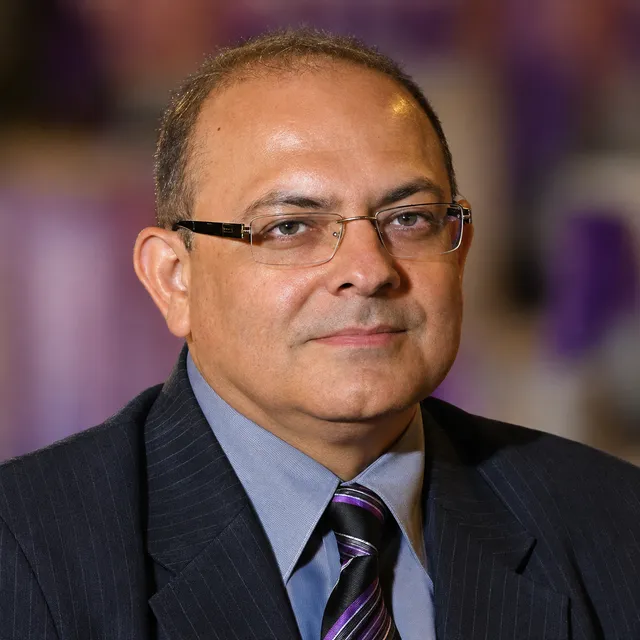
Douglas Durán

United Nations Latin American Institute for the Prevention of Crime and the Treatment of Offenders, Costa Rica

Douglas Durán Chavarría is Director of the United Nations Latin American Institute for the Prevention of Crime and the Treatment of Offenders (ILANUD). He holds a law degree from the University of Costa Rica and a master’s degree in criminology, awarded with honours by the Université Catholique de Louvain in Belgium. He has worked as a researcher at the University of Costa Rica’s Legal Research Institute. In 2016, he was a visiting researcher in the Department of Criminology at the Max Planck Institute in Freiburg im Breisgau, Germany. He is a member of the Board of Directors of the Société Internationale de Criminologie. Professor Durán has extensive experience with international organisations, including UNODC, UNICEF, UNDP and UNAFRI, and is a researcher with the Ibero-American Network of Researchers in Criminal Policy (POLYSEG).
Dr. Vineet Kapoor

Dr. Vineet Kapoor

National Law University Delhi, and Madhya Pradesh Police, India
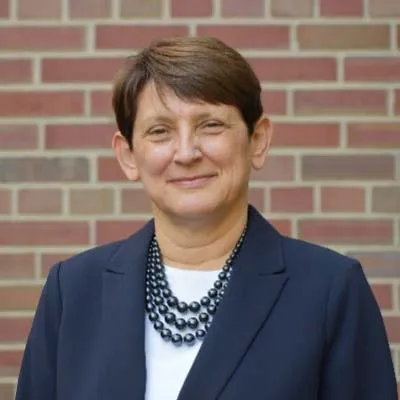
Dr. Vineet Kapoor

National Law University Delhi, and Madhya Pradesh Police, India

Dr. Vineet Kapoor, IPS, is a senior police officer and internationally recognised expert in police reform, human rights, access to justice, evidence-based policing and conflict management. With more than three decades of service in the Indian Police Service, he has contributed to modernising police institutions through innovative training systems, rights-based policing, gender-responsive interventions and community-oriented reform strategies. He currently serves as Deputy Inspector General of Police, Madhya Pradesh Police, and holds academic and research positions as Honorary Professor at National Law University Delhi, Senior Fellow at the Cambridge Centre for Evidence-Based Policing, and Visiting Professor of Practice at the University of Virginia. As a “pracademic”, he combines professional practice with scholarship and has led national and international research projects, including RCT-based policing initiatives with J-PAL MIT. Dr. Kapoor holds a PhD from the Tata Institute of Social Sciences and a master’s in human rights from the University of Essex. His publications include The Indian Police: Administration, Capacity and Performance (Oxford University Press, 2024). He is a recipient of the IACP Community Safety Award (2024), the British Chevening Human Rights Fellowship, and the UN Hero of Human Rights Award (2026).
Professor Sanja Kutnjak Ivkovich

Professor Sanja Kutnjak Ivkovich

Michigan State University, United States of America
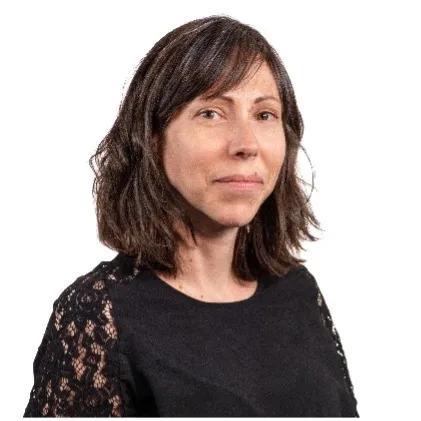
Professor Sanja Kutnjak Ivkovich

Michigan State University, United States of America

Sanja Kutnjak Ivković is Professor at the School of Criminal Justice, Michigan State University, USA. Dr. Kutnjak Ivković serves as Co-Editor-in-Chief of Policing: An International Journal. She is also First Vice-President of the Academy of Criminal Justice Sciences (2026–2027). Dr. Kutnjak Ivković is the recipient of the 2017 Mueller Award for Distinguished Contributions to International Criminal Justice from the Academy of Criminal Justice Sciences International Section, the 2026 Freda Adler Distinguished Scholar Award from the American Society of Criminology, and the 2026 Ken Haas Outstanding Alumni Award from the University of Delaware. She has served as Chair of the Division of International Criminology, American Society of Criminology (2017–2019; 2019–2021), and Chair of the International Section, Academy of Criminal Justice Sciences (2011–2013). Dr. Kutnjak Ivković has co-authored or co-edited 14 books and published over 90 journal articles and 50 book chapters.
Professor Chloé Leclerc

Professor Chloé Leclerc

University of Montreal, Canada

Professor Chloé Leclerc

University of Montreal, Canada

Chloé Leclerc is a Full Professor at the School of Criminology at the Université de Montréal, specialising in criminal courts and correctional systems. Her research focuses on criminal justice practices in Canada, including plea bargaining, access to justice, sentencing practices, parole and public perceptions of the courts. Her current work examines the experiences of justice-involved women and the challenges of community supervision. She is Director of the International Centre for Comparative Criminology (CICC), which brings together over 70 researchers in Quebec, and President of the International Association of French-Speaking Criminologists (AICLF).
Professor Tina Lorizzo

Professor Tina Lorizzo

REFORMAR – Research for Mozambique, and University of the Western Cape, South Africa

Professor Tina Lorizzo

REFORMAR – Research for Mozambique, and University of the Western Cape, South Africa

Tina Lorizzo is the founder and Director of REFORMAR – Research for Mozambique and an Associate Professor at the Faculty of Law, University of the Western Cape, South Africa. She is also a Research Associate with Africa Criminal Justice Reform at the Dullah Omar Institute. She holds a PhD in Public Law and a Master’s degree in Criminology from the University of Cape Town, as well as a law degree from the University of Bologna, Italy. With more than fifteen years of experience in criminal justice and human rights, particularly in Lusophone Africa, her research focuses on prison reform, police and policing, access to justice, women and children in conflict with the law, and the relationship between formal justice systems and customary law. She is the author of Community Courts and Postcolonial Legal Pluralism: Criminal Justice in Mozambique (Routledge, 2024) and has contributed extensively to research and policy initiatives on criminal justice reform and human rights in Mozambique and Southern Africa.
Professor Nina Peršak

Professor Nina Peršak

Institute for Criminal-Law Ethics and Criminology, Slovenia
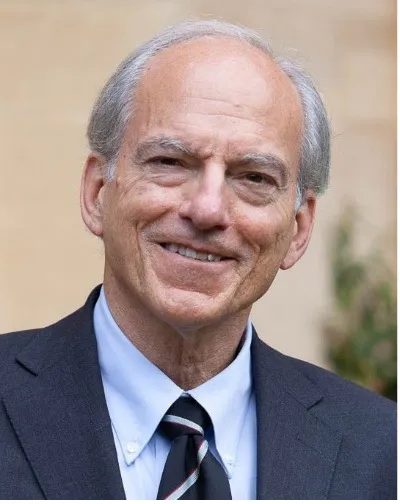
Professor Nina Peršak

Institute for Criminal-Law Ethics and Criminology, Slovenia

Nina Peršak is Scientific Director and Senior Research Fellow (Institute for Criminal-Law Ethics and Criminology, Ljubljana), Specialist Consultant for Research Ethics and Integrity (University of Ljubljana), Full Professor of Law (University of Maribor) and Academic Consultant (Ghent University). She also serves as an expert member of the European Commission’s Expert Group on EU Criminal Policy and co-chairs the ‘Equity and Criminal Justice’ Working Group at the Berkeley Center on Comparative Equality & Anti-Discrimination Law (UC Berkeley). Her research interests lie within the domains of criminal law, criminology, human rights, victimology, criminal-law policy, ethics and sociology of law, reflecting her academic background in law, criminology and social psychology. Her central research engagement involves questions of legitimacy and justice, particularly issues of harm, criminalisation, human rights, social impact and extra-legal factors influencing regulation.
Professor Larry Sherman

Professor Larry Sherman

University of Maryland, United States of America, and University of Cambridge, United Kingdom
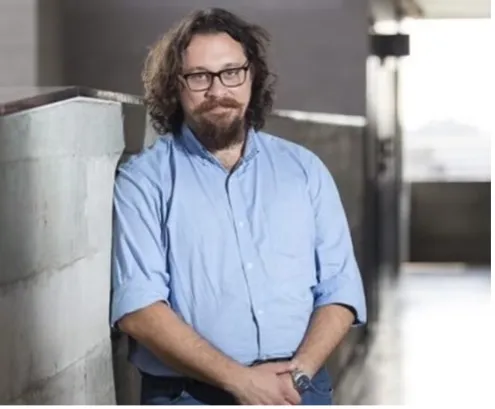
Professor Larry Sherman

University of Maryland, United States of America, and University of Cambridge, United Kingdom

Lawrence W. Sherman is Chair of the Cambridge Centre for Evidence-Based Policing and Wolfson Professor of Criminology Emeritus at the University of Cambridge. From 2000 to 2005, he served as President of the International Society of Criminology and hosted the 15th World Congress at the University of Pennsylvania. From 2007 to 2022, he led the Police Executive Programme at the University of Cambridge. From 2022 to 2024, he served as Chief Scientific Officer of the Metropolitan Police Service (London). Since beginning his career as an analyst in the New York City Police Department, he has designed or led experiments in over 50 police agencies on four continents, while training over 2,000 police officers and analysts in evidence-based policing. A former President of the American Society of Criminology, he holds honorary degrees or medals from five universities. In 2010, he was elected Honorary President of the Society of Evidence-Based Policing, which, in 2025, established the annual Lawrence W. Sherman Prize for outstanding contributions to evidence-based policing.
Professor Máximo Sozzo

Professor Máximo Sozzo

National University of Litoral, Argentina
Professor Máximo Sozzo

National University of Litoral, Argentina

Dr. Máximo Sozzo is a Professor of Sociology and Criminology and Director of the Crime and Society Program of the National University of Litoral – NUL (Santa Fe, Argentina). He is a co-author of Southern Criminology (Routledge, 2019) and a co-editor of The Palgrave Handbook of Criminology and the Global South (Palgrave, 2018) and The Political Economy of Punishment Today (Routledge, 2018). He has published widely on punishment and prison studies in Spanish, Italian, Portuguese, English and Mandarin, including 18 books and 100 chapters and essays in scientific journals. He has worked with Dr. Brandariz from the University of La Coruña (Spain), with whom he co-edited one of his recent books. Dr. Sozzo has also co-taught with Dr. D. Moore at NUL and was a visiting scholar at the University of Ottawa and Carleton University, working with Drs. D. Moore and Velloso, in the winter of 2021/22. He has represented Argentina on the Steering Committee, led the Argentina Jurisdictional Team, and led the provincial-level research hub in Argentina

Sponsors & Supporters

Academy of Criminal Justice Sciences